Dynasty Tales
More than two thousand years ago, during the Warring States period, China was divided into states that often fought one another. Qin was the strongest, and other states feared it. Zhao lay beside Qin and often faced its threats. Zhao had a famous general named Lian Po.
In the sixteenth year of King Huiwen of Zhao, Lian Po led an army against Qi. He defeated Qi's forces and captured a city called Yangjin. The king appointed him shangqing, a high-ranking official. Rulers throughout the states knew of Zhao's brave and capable general.
Another man lived in Zhao: Lin Xiangru. He was no great official. He served as a retainer in the household of Miao Xian, the official responsible for the palace eunuchs. A retainer lived and worked under a powerful patron. Lin Xiangru had begun with a lowly position.
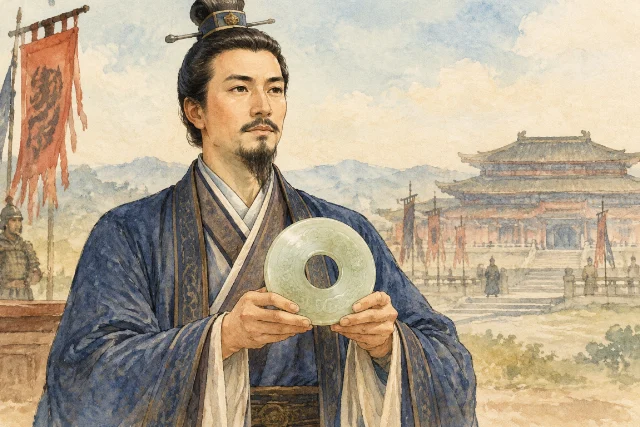
One year, the king of Zhao obtained a rare jade treasure from Chu, the He Shi Bi. A bi was a jade disk. The king of Qin heard about it and offered fifteen cities in exchange. Zhao's king discussed the offer with Lian Po and his officials. If they sent the jade, Qin might keep it without handing over the cities. If they refused, Qin might attack. No one could settle the question, or find the right person to send to Qin.
Miao Xian recommended his retainer, Lin Xiangru. He told the king about an earlier event. After committing an offense, Miao Xian had planned to flee to Yan. He thought its king would shelter him: at a border meeting, that king had privately taken his hand and offered friendship. Lin Xiangru had explained why this was dangerous. Zhao was strong and Yan was weak. Yan would not dare protect a fugitive from Zhao; it might bind him and send him back. Asking Zhao's king for forgiveness offered a better chance. Miao Xian had followed the advice and been pardoned. This man, he said, was brave and thoughtful enough to act as an envoy.
The king summoned Lin Xiangru and asked what to do. Lin Xiangru reasoned that if Zhao refused Qin's offer of cities for jade, Zhao would be in the wrong. If Zhao sent the jade and Qin withheld the cities, Qin would be in the wrong. Better to accept and place responsibility on Qin. He also volunteered to go. If there was no one else, he would take the jade himself. If Zhao received the cities, the jade could remain in Qin. If not, he would bring it back whole.
The king sent him west with the He Shi Bi. Qin's king received the jade with delight and passed it to the women and officials around him. He showed no sign of handing over the cities. Lin Xiangru recognized the empty promise. He said the jade had a small flaw that he wished to point out. The king returned it to him. With the disk back in his hands, Lin Xiangru declared that he would rather perish with it than let Qin take it for nothing.
Fearing the loss of the jade, the king apologized and agreed to grant Zhao fifteen cities. Lin Xiangru still saw deception. He said Zhao's king had prepared for five days before sending the jade, and Qin's king should do the same before accepting it in a great ceremony. This preparation meant bathing, changing clothes, and observing respectful restrictions before an important event. The king agreed.
Lin Xiangru used the time to send a companion quietly home. The man wore coarse clothing, hid the jade against his chest, and took a smaller road back to Zhao. Qin's king reasoned that killing Lin Xiangru would not recover the jade and would break relations with Zhao. Better to treat him well. In the end, he sent the envoy home with proper courtesy.
Zhao's king considered Lin Xiangru a capable official who had served abroad without bringing disgrace on the state. He appointed him shang dafu, a senior court official. Qin never gave Zhao the cities, and Zhao never gave Qin the jade. A former retainer had risen through one successful mission.
Another Great Service
Qin attacked Zhao again. Its army captured a city called Shicheng. The following year, another Qin attack killed twenty thousand Zhao soldiers.
Later, Qin's king sent an invitation to meet Zhao's king at Mianchi, beyond the western river. Zhao's king was afraid to go. Lian Po and Lin Xiangru argued that refusing would make Zhao appear weak and timid. The king set out. Lian Po escorted him to the border and proposed an agreement: the journey should take no more than thirty days. If the king had not returned by then, the crown prince should become king, so Qin could not hold Zhao to ransom. The king agreed, and Lin Xiangru went with him.
At Mianchi, Qin's king drank wine and said he had heard that Zhao's king enjoyed music. Would he play the se, a stringed instrument? Unable to refuse easily, Zhao's king played. Qin's recorder immediately wrote down the date and recorded that Qin's king had ordered Zhao's king to perform.
Lin Xiangru stepped forward. He had heard that Qin's king was skilled in Qin's music, he said. Would the king beat an earthenware vessel for Zhao's king? Such a vessel, called a fou, could hold wine. Qin's king refused angrily. Lin Xiangru knelt with the vessel and asked again, but the king still refused. Lin Xiangru stood close to him and warned that he would not yield: within five paces, continued refusal would have serious consequences. Attendants moved to draw weapons, but he stared and shouted so fiercely that they stepped back. The unhappy king finally struck the vessel once. Lin Xiangru immediately ordered Zhao's recorder to note that on that date Qin's king had beaten the fou for Zhao's king.
Qin's officials then asked Zhao to present fifteen cities in honor of their king. Lin Xiangru replied at once that Qin should present its capital, Xianyang, to honor Zhao's king. By the end of the feast, Qin had gained no advantage over Zhao.
Zhao had also prepared a large military force against any attack. Seeing those preparations, Qin did not dare move rashly.
Ranked Ahead of Lian Po
After the meeting at Mianchi, Zhao's king returned safely home. To reward Lin Xiangru's service, he appointed him shangqing—the same high rank as Lian Po.
More than that, Lin Xiangru was placed ahead of Lian Po in the order of precedence. In their time and earlier periods, the right-hand position could indicate higher status. The history says Lin Xiangru's place was “to the right of Lian Po,” meaning that he ranked ahead of him.
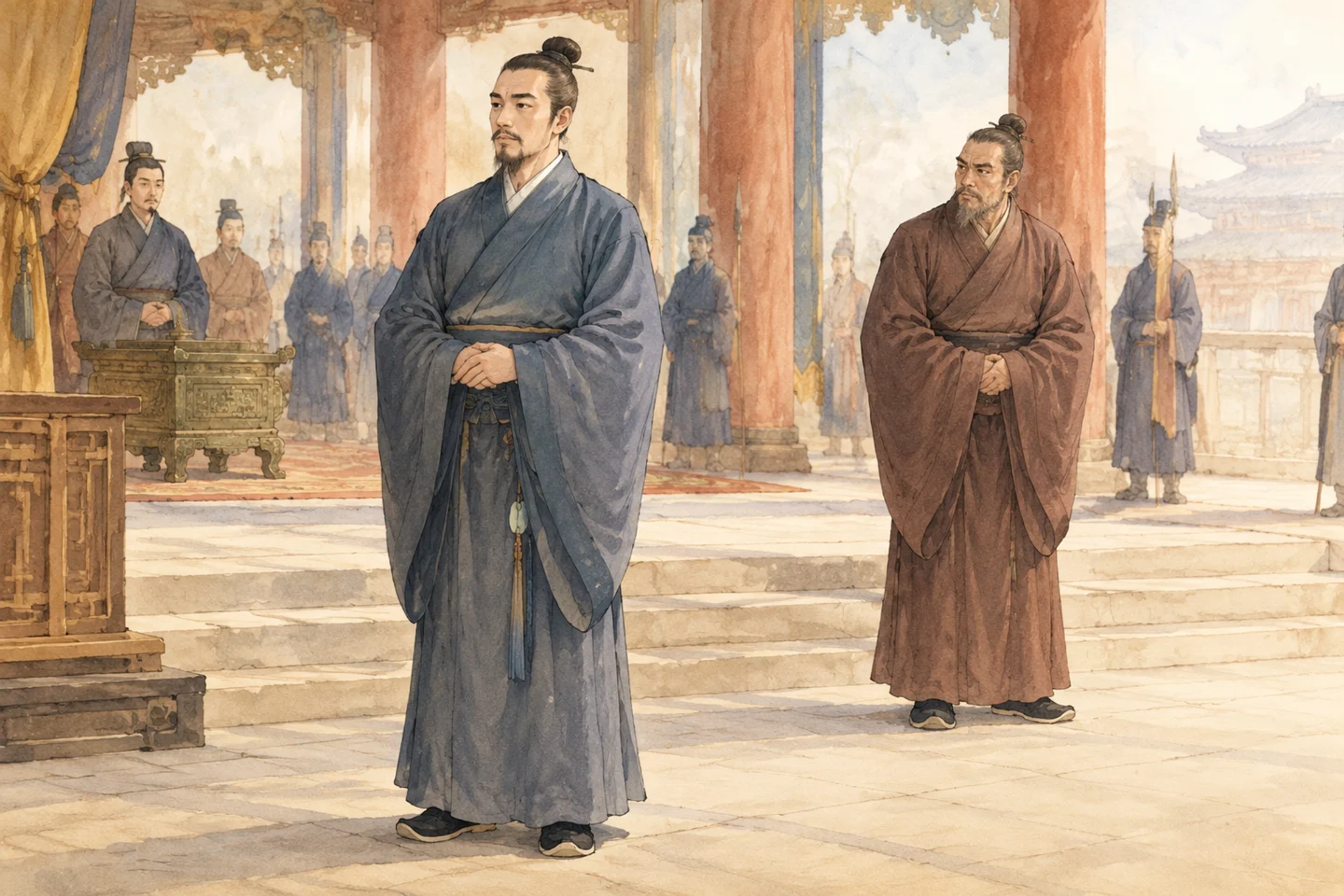
Lian Po was deeply resentful. He was Zhao's great general, he said. He had captured cities and fought major battles in the field. Those were solid military achievements. What had Lin Xiangru done? Spoken a few clever words! Yet his reward was greater and his place higher. Besides, he had come from a lowly background as a retainer. Serving at the same court beneath such a man felt humiliating. Lian Po could not bear it.
He even announced publicly that whenever he met Lin Xiangru, he would humiliate him to his face.
The words soon reached Lin Xiangru.
Lin Xiangru Steps Aside
Lin Xiangru did not go to argue with Lian Po. He did not debate whose achievements were greater.
On days when officials gathered at court, he often claimed to be ill and stayed away. Court meetings brought officials to the palace to stand in order and discuss affairs of state. By not attending, Lin Xiangru avoided standing beside Lian Po in a contest over rank.
Once, while going out on business, he saw Lian Po's carriage and horses approaching in the distance. He immediately told his driver to turn aside. They waited out of the way until Lian Po had passed.
Lin Xiangru's own retainers could no longer accept this. They had joined his household and helped with his work. Now they came together to speak with him. They had left their families because they admired his honorable character, they said. He and Lian Po held equal office. Yet while Lian Po insulted him, he hid as though terrified. Even an ordinary person would feel ashamed. How much more should a senior official? They could offer him no help, they said, and asked to leave.
Putting the State First
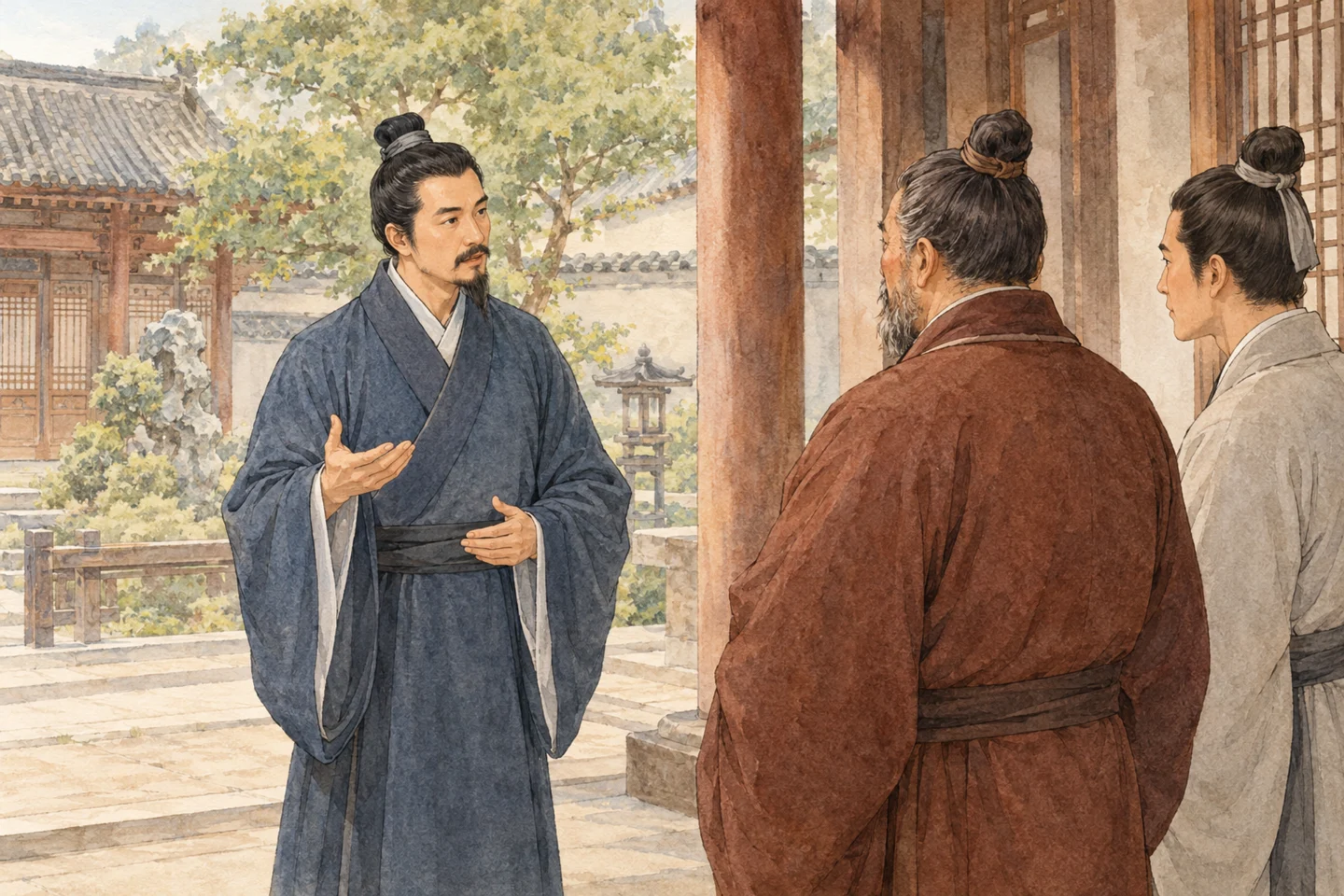
Lin Xiangru firmly asked the retainers to stay. He would not let them leave.
Before explaining himself, he asked an unexpected question. Which was more powerful and frightening: General Lian or the king of Qin?
The retainers answered that the king of Qin was far more formidable.
Lin Xiangru agreed. Even in Qin's own court, he had confronted its powerful king and challenged the officials around him. Though he claimed no great ability, why would he fear General Lian alone?
Then he explained what he had been considering. Powerful Qin hesitated to attack Zhao because both he and General Lian were there. If they fought like two tigers, they could not both remain unharmed. One would fall. He was not avoiding Lian Po out of fear. He was putting the urgent needs of the state before his private grievance.
Carrying Branches to Ask Forgiveness
Lin Xiangru's explanation soon reached Lian Po. He was not afraid of the general; he was placing the state first.
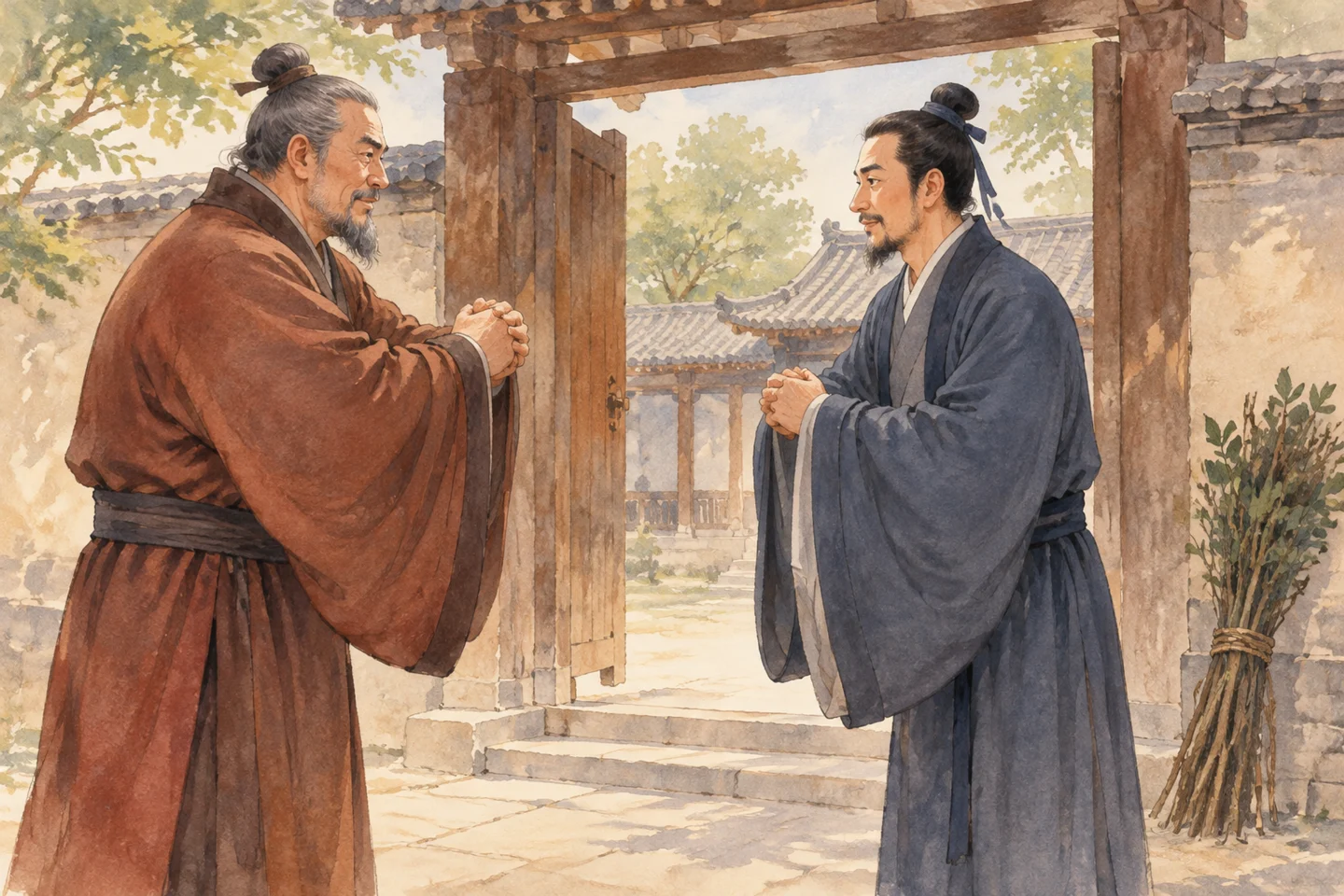
The general who had won so many battles made no more threats. He removed his upper clothing and carried a bundle of thorny branches on his bare back. Such branches could be used as a whip. Carrying them showed that he was willing to accept punishment. Guided by retainers, he went to Lin Xiangru's door to apologize. Retainers helped their patrons carry messages and conduct business.
Picture the change. Not long before, Lian Po had threatened to humiliate Lin Xiangru. Now he stood at his door, carrying branches and admitting his fault. When he met Lin Xiangru, he said that he had been crude and narrow-minded. He had never realized how generously Lin Xiangru had treated him.
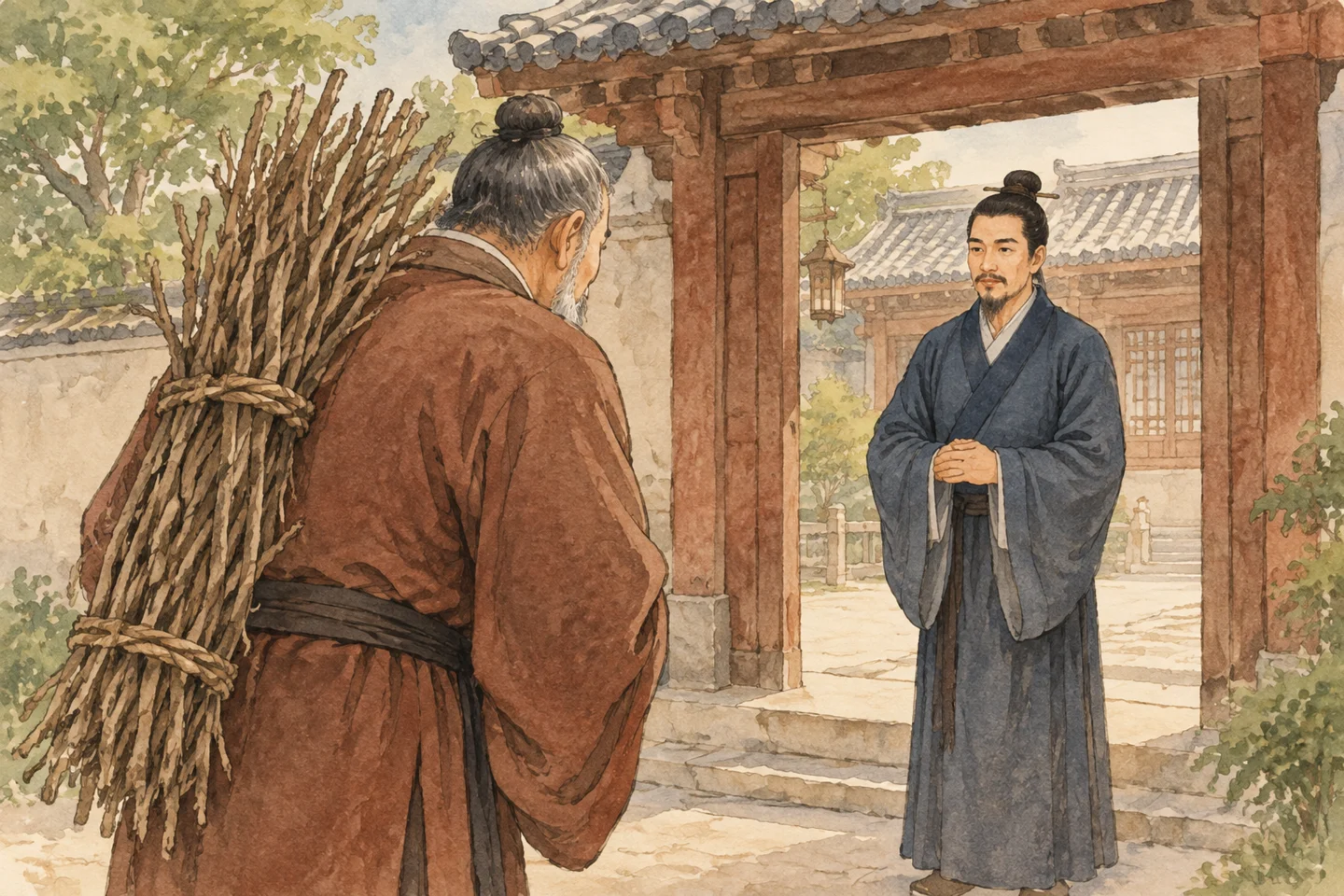
The two reconciled and became friends bound by the deepest trust. The old expression wen jing zhi jiao describes friends who would face death together and remain loyal through danger. That was how the friendship of Lian Po and Lin Xiangru was remembered.
Zhao now had Lian Po to command its army and Lin Xiangru to serve at court, working together. As Lin Xiangru had said, powerful Qin hesitated to attack because both men stood on Zhao's side.