 Dynasty Tales
Nuwa Creates Humans: From Yellow Clay Figures to a Thriving World
When heaven and earth were newly opened, the world had mountains, rivers, birds, and animals, but not a single human. How did the powerful goddess Nuwa use yellow clay to create a lively human world?
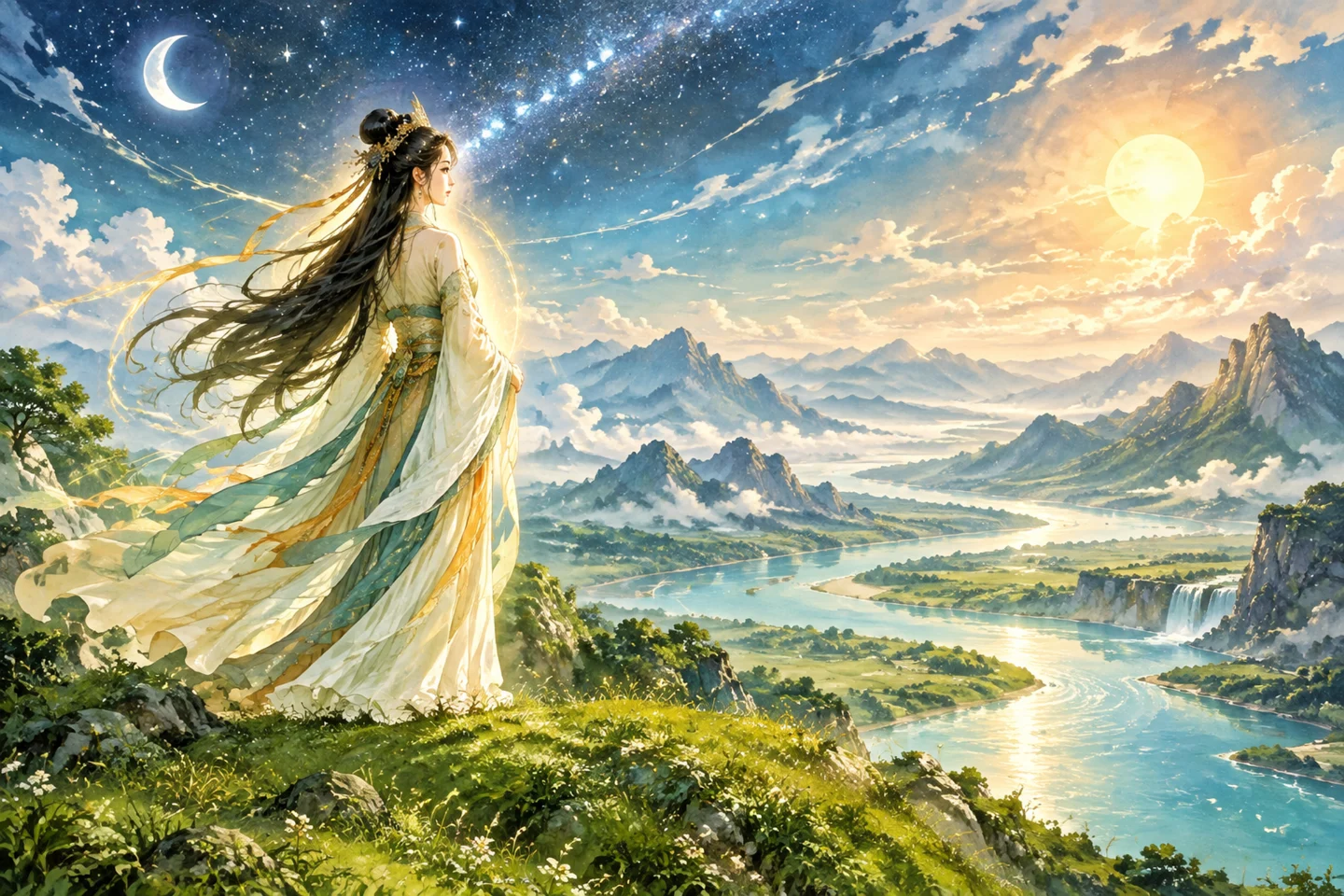
How does Nuwa create humans?
In this Chinese creation myth, Nuwa shapes people from yellow earth. Making each person by hand takes time, so she draws a cord through the mud and scatters drops that become more people. The clay and cord are two ways the story imagines the beginning of human life.
The account is a myth, not a scientific explanation of human origins. The source notes below distinguish the older clay-and-cord tradition from this retelling’s imagined setting, dialogue and details. This page offers an overview and the opening of the story; the complete retelling is reserved for members. Membership purchases are not open yet.
Try this together: What changes when Nuwa starts using the cord instead of shaping every figure by hand?
Read the opening
An old Chinese myth tells this story. A long, long time ago, when the heavens and earth had just been opened, the world looked very different from how it does now. In the sky, there was a brilliant sun, a bright moon, and twinkling stars. On the ground, there were rolling mountains, lush green plants, and all kinds of birds, beasts, insects, and fish. Although the world was filled with the colors of nature, it felt strangely quiet—even a bit desolate and lonely—because at that time, there were no human beings.
Across these vast wild plains, there appeared a powerful goddess named Nuwa. Nuwa possessed magical powers; it was said that she could change her appearance seventy times in a single day, altering her form however she wished. She often walked through the thick, wild forests and fields, observing the scenery around her. Although she saw birds darting through the trees and heard beasts running through the valleys, she always felt that something was missing.
🔒 Members-only story
Checking your membership…
Myth and source notes
This is a Chinese creation myth, not a scientific account of human origins. Taiping Yulan, chapter 78, quotes the clay and cord story from Fengsu Tong; Yishi, chapter 3, preserves the tradition of Nuwa as a matchmaker. This retelling leaves out the old social-rank explanation. The Ru River setting, the vine, the children’s cries, and Nuwa’s thoughts are details of the retelling, not facts established by those passages. The pictures imagine the myth.
© 2026 Dynasty Tales · Credits and copyright
Story audio is coming. Let me know when it launches.
Help us choose what to make next. These features are not open yet. Joining is free; no account or payment is required.
Notify me when it launches →