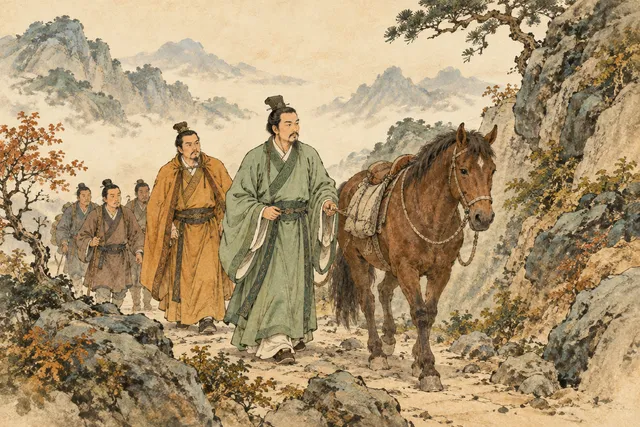
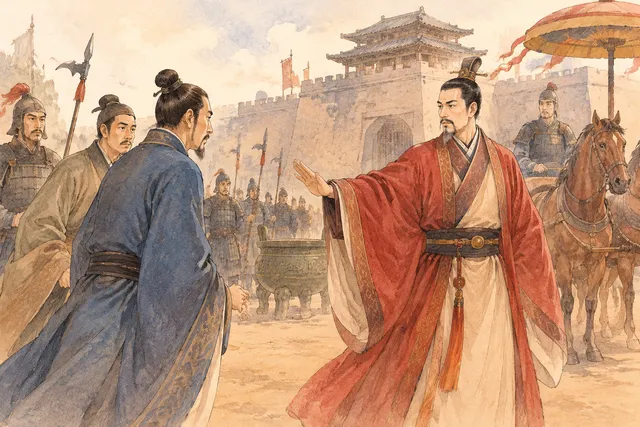
Dynasty Tales
A Strong Neighbor and a Weaker State
In the spring of 684 BCE, two neighboring states in what is now Shandong were on the brink of war.
One was Qi, with its capital at Linzi, northeast of present-day Zibo. Its coast brought profits from fish and salt, and it had broad lands and many soldiers. The other was Lu, with its capital at Qufu. Lu's ruling family descended from the Duke of Zhou. It valued ceremonies, music, and proper conduct, but it was less powerful than Qi.
The two states had a long connection. When the Zhou dynasty first granted lands to its supporters, Qi went to Jiang Taigong, while Lu went to Boqin, the Duke of Zhou's son. Both ruling houses descended from founders of the dynasty. Generations later, though, shared roots mattered less than strength.
This was the early Spring and Autumn period. The Zhou king still held his title, but his commands carried little weight. Rulers competed for land and power, and the strongest often had their way. Border quarrels between neighboring Qi and Lu were common. This time, however, an entire army was coming.
Lu's ruler was Duke Zhuang. He wanted to govern well, but he was unsure what to do. Lu respected Zhou traditions and spoke of fairness and duty. Those values did not necessarily win battles. Even children in the street knew Qi was stronger. Defeat might cost Lu far more than a few towns: the whole state could be at risk.
A Struggle for the Throne
The trouble had begun the year before.
Qi's ruler had died during unrest, leaving no one firmly in control. Two of his brothers were living abroad. Prince Jiu had fled to Lu, and Prince Xiaobai had taken shelter in Ju. Whoever reached Linzi first could claim the throne.
Lu had its reasons for backing Prince Jiu. His mother came from Lu, so his success might draw the two states together. Lu sent troops to escort him home. His adviser Guan Zhong intercepted Xiaobai and shot an arrow that struck his belt hook. Xiaobai cried out and fell, pretending to be dead.
Guan Zhong thought the danger was over, and Prince Jiu's party slowed down. Xiaobai, meanwhile, hurried to Linzi by a shorter route. He took the throne first and became Duke Huan of Qi, who would later gain power over other rulers.
Lu refused to accept the result and fought Qi, only to suffer a heavy defeat. Qi forced Lu to kill Prince Jiu, and Guan Zhong was taken back to Qi under guard. Lu's gamble had failed completely. It had also made an enemy of its powerful neighbor. Duke Zhuang swallowed his anger and hoped there would be peace.
Duke Huan had other ideas. Newly secure on the throne, he wanted to show his strength. Lu had opposed him and had already lost a battle. To him, it looked like an easy target. When spring came the following year, Qi's soldiers marched out of Linzi toward Lu.
Cao Gui Asks to See the Duke
News reached Qufu, and fear spread through the city. Duke Zhuang called his officials together. He spoke of fighting, but doubts troubled him. Lu had fewer troops than Qi. A direct clash would be difficult to win.
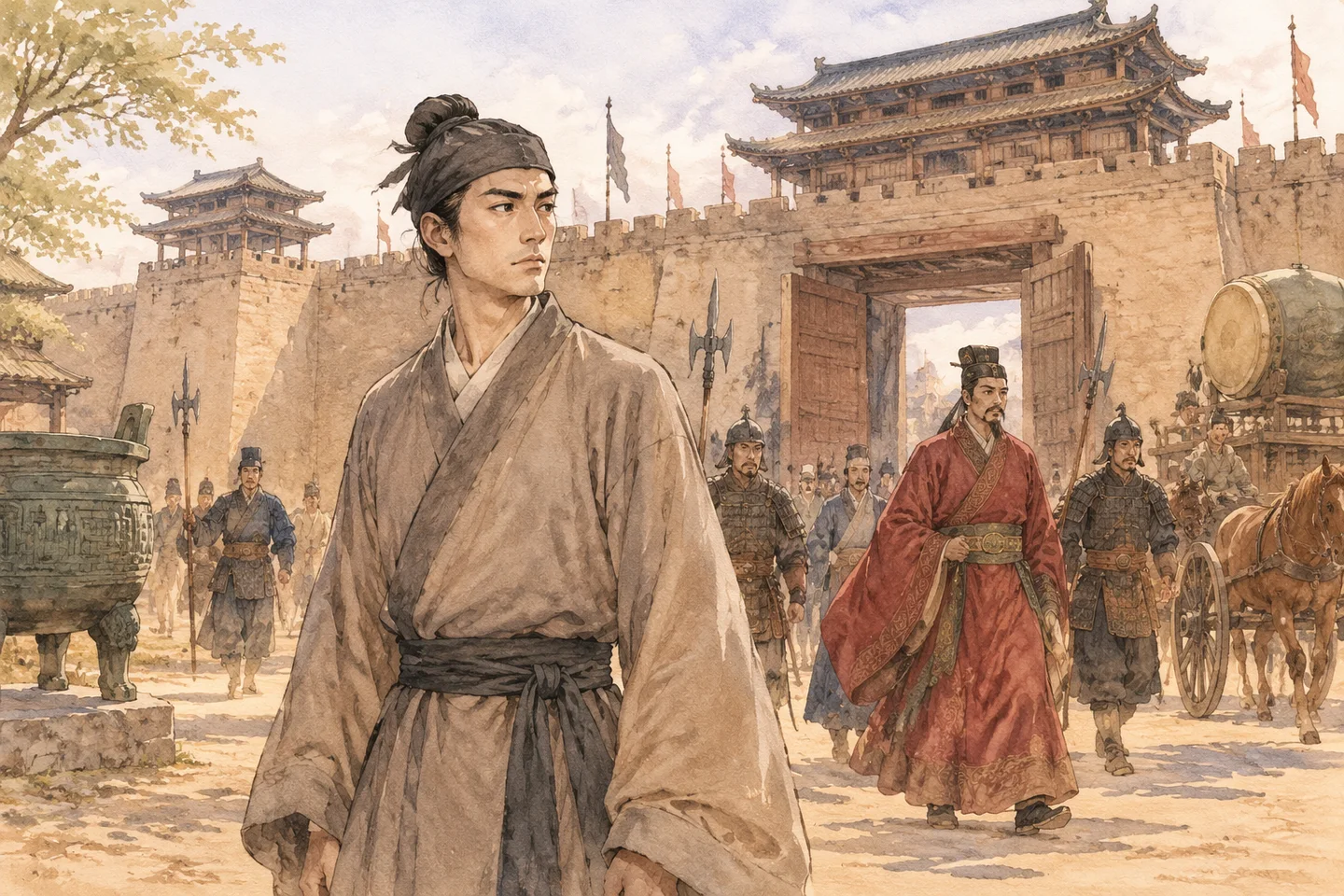
Outside the city lived Cao Gui. He held no official position, but he had studied and understood military affairs. When he heard that Qi's army was coming, he could no longer sit still. He told his neighbors, “I am going to see our ruler.”
A neighbor laughed. “War is the business of important officials. Who asked you to interfere?”
Cao Gui shook his head. “Those powerful officials may be shortsighted. They may not see far enough ahead.”
The neighbor tried again. “You have no rank or office. Say the wrong thing, and you could lose your head.”
Cao Gui smiled. “Our state is in danger. If I keep quiet, I will be letting everyone down.”
He argued no further. Brushing off his sleeves, he set out. On the road from his village to Qufu, one question occupied him: what did the duke rely on to fight Qi? Lu had fewer soldiers and less land. What advantage did its ruler still possess? Cao Gui could find no answer. That was why he had to meet him.
At the city gates, carts and horses hurried along the main road. Everyone looked worried. A guard stopped Cao Gui. An ordinary person could not simply walk in and see the ruler.
Cao Gui remained calm. “I have something to say to the duke himself. I want to ask how this battle can be fought.” The guard was doubtful, but went inside to report his request.
Three Questions in the Hall
Duke Zhuang was surprised that an ordinary man had asked to see him. Still, he allowed Cao Gui to enter. With an enemy approaching, another idea might help.
Cao Gui bowed, then asked directly, “What do you rely on to fight Qi, my lord?”
The duke answered just as plainly. “I never keep all my food and clothing for myself. I share them with the people around me.”
Cao Gui shook his head. “Those small favors reach only your close attendants. The people receive nothing. Why would they risk their lives for you?”
The duke thought for a moment. “When I offer cattle, sheep, jade, and silk to the spirits, I never claim to give more than I really do.”
“That is only a small act of honesty,” Cao Gui replied. “It does not mean the spirits will bless you.”
Both answers had been rejected. The duke's confidence sank. The hall was quiet for a while before he spoke again. “I cannot investigate every detail of every legal case, large or small. But I always try to judge fairly, according to the circumstances.”
Cao Gui's eyes brightened. “That shows real concern for the people. On that basis, we can fight.” He paused. “When the day comes, please let me go with you.”
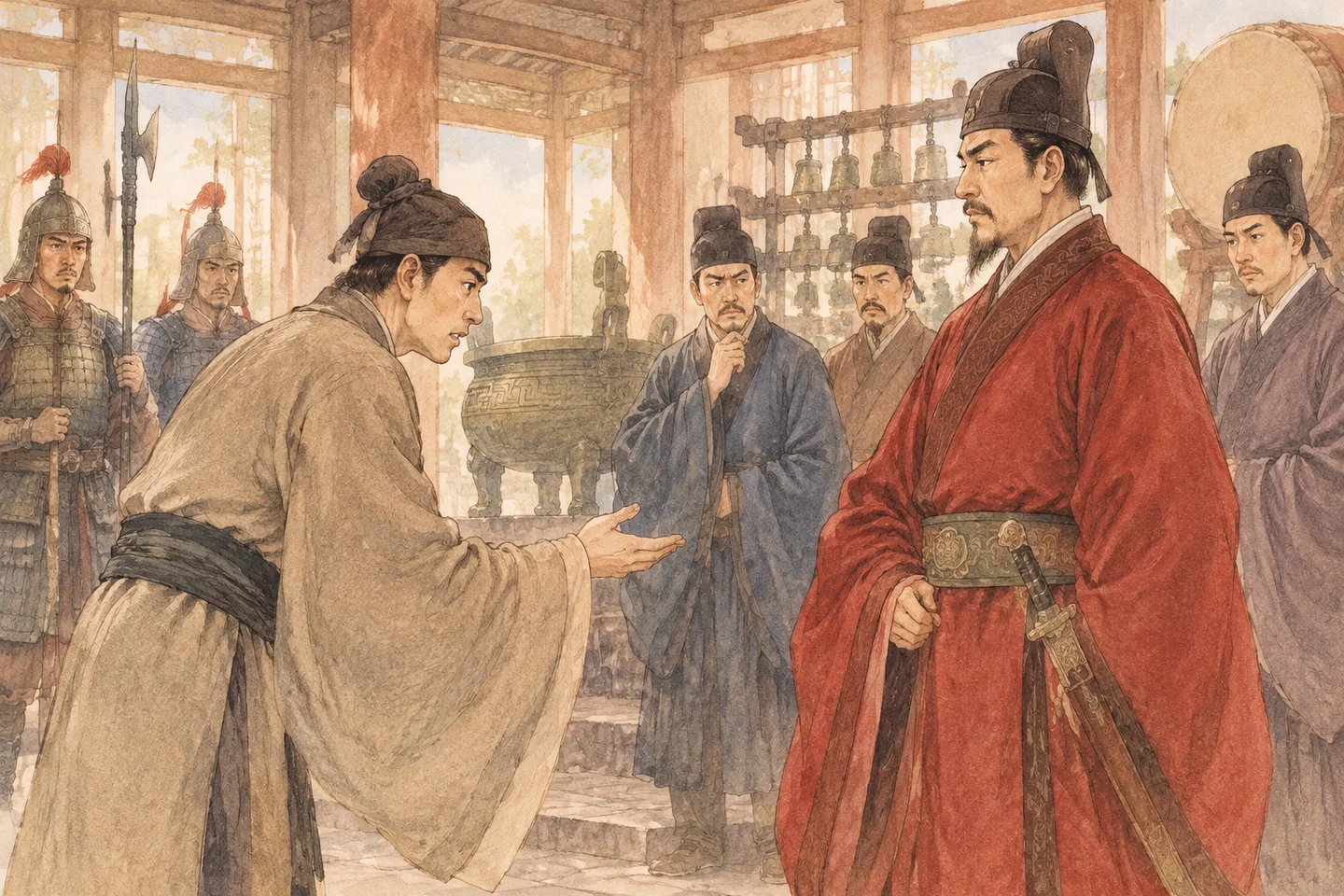
The officials looked at one another. An ordinary man had spoken only a few words, yet the duke agreed. Duke Zhuang could not quite explain why he trusted him. Perhaps Cao Gui had put his finger on the question that mattered most.
Riding Out Together
Lu's army left Qufu for Changshao, in present-day Shandong. People lined the road to see it off. The duke glanced back at them and felt a little steadier. He invited Cao Gui to ride beside him in the same war chariot.
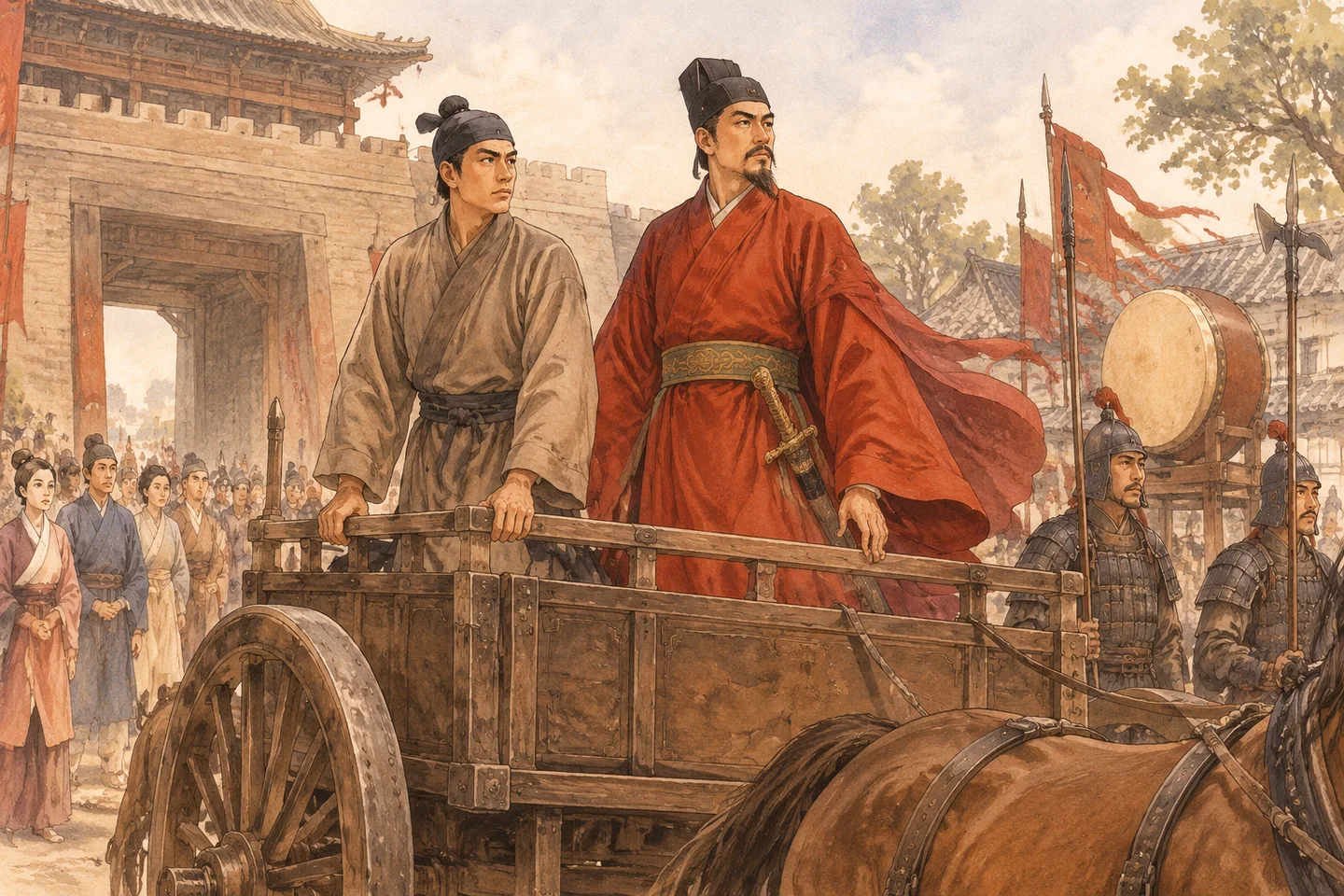
Cao Gui now had an answer to the question that had troubled him on the road. The duke's advantage was the people's support. Whether that support could become strength in battle would depend on choosing the right moment.
The armies formed up at Changshao. Across the field, Qi's flags crowded together above orderly ranks of chariots. On Lu's side, many soldiers had sweaty palms. How could they win this fight?
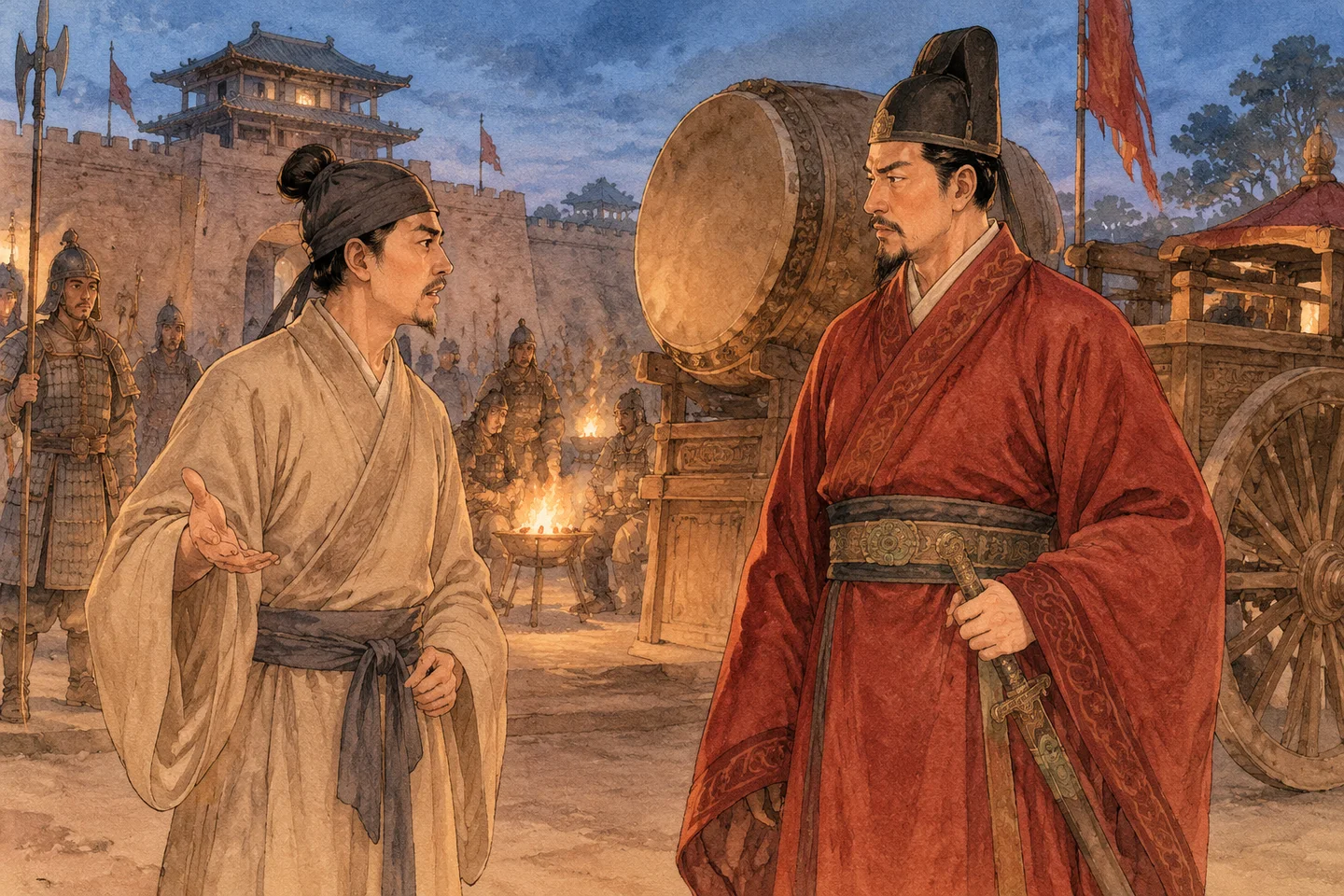
The duke's face was tense too. He held the drumstick himself, ready to order the charge. In those days, a drumbeat signaled the army to advance. Without it, the soldiers were not to rush forward.
Lu's soldiers noticed something unusual. Their ruler held the drumstick, but did not strike. They watched his hand, growing anxious.
Cao Gui spoke softly. “Wait.”
“For what?” the duke asked in a low voice.
“Let them move first. Strike your drum when I say.”
The duke set his jaw and nodded. The safety of his state now rested on an ordinary man's patience.
Qi's Drums Sound Again and Again
Qi’s first round of war drums sounded.
The duke's heart leaped. He raised the drumstick high.
“Not yet!” Cao Gui caught his arm.
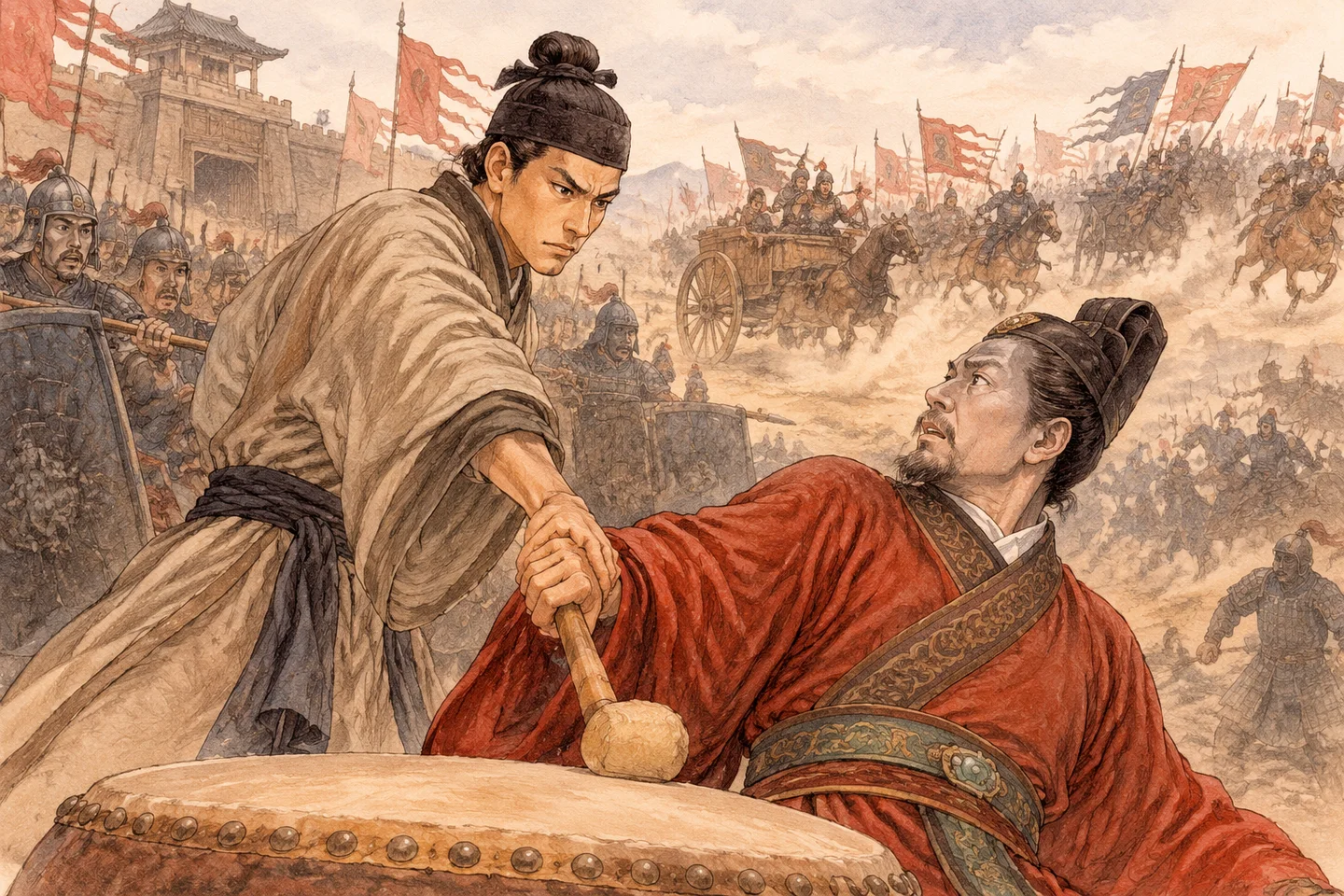
Lu’s soldiers kept their bows ready and their shields planted. No one broke formation. Qi’s drums sounded, but Lu continued to hold its position.
Before long, Qi’s drums sounded a second time.
The duke raised his hand again.
“Not yet.” Cao Gui did not speak loudly, but his words held the duke still.
Murmurs spread through Lu's ranks. What was their ruler doing? Were they simply supposed to take the blows? Sweat rolled down the duke's forehead. He turned toward Cao Gui, started to speak, then swallowed his words.
Cao Gui looked at no one. His gaze passed over the chariots in front of him and stayed on the great drum behind Qi's lines.
Across the field, the drummer raised his drumsticks again.
On Lu's side, everyone held their breath.
The Third Drumbeat
At last, Qi's drums sounded for the third time.
After this round of drums, Qi’s courage was no longer as strong as it had been at first. Cao Gui had been waiting for this moment.
Lu's soldiers were in a very different state. After waiting through two rounds of drums, their energy had built up. Bowstrings quivered. Hands gripped spears and dagger-axes tightly. The murmuring stopped. Every pair of eyes was fixed on the drumstick in the duke's hand.
Cao Gui released the duke's arm.
“Now. Beat the drum.”
The duke had waited so long for those words that his throat was dry. He swung the drumstick, striking harder and harder. The sound rolled over the field like thunder. Lu's soldiers roared together and rushed toward Qi like water bursting through a gate.
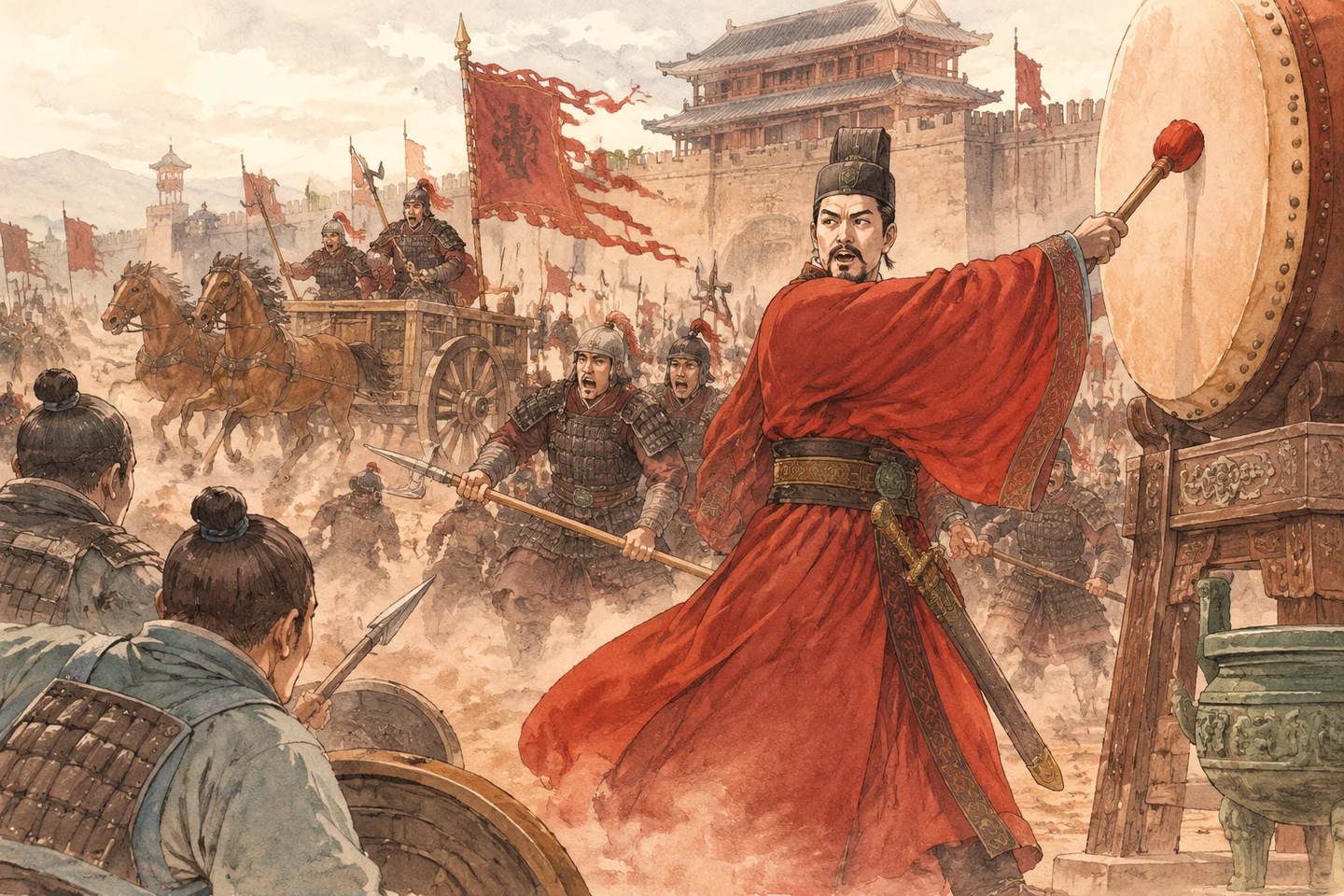
The clash settled matters quickly. Qi's front chariots broke apart, and its formation fell into confusion. The men behind saw those ahead retreating and turned to run. Chariots struck chariots, and soldiers stumbled over one another. What had looked like a battle between two armies became a rout.
Tangled Tracks and Fallen Flags
Delighted, the duke raised his hand to order a pursuit.
“Wait.” Cao Gui stopped him again.
The duke stared at him impatiently. “What are we waiting for now? They will get away!”
Cao Gui did not answer. He jumped down from the chariot and bent over the wheel tracks. They crossed one another in a tangled mess. Then he climbed onto the chariot's front crossbar and stretched up to look into the distance. Qi's flags were tilted and scattered across the field.
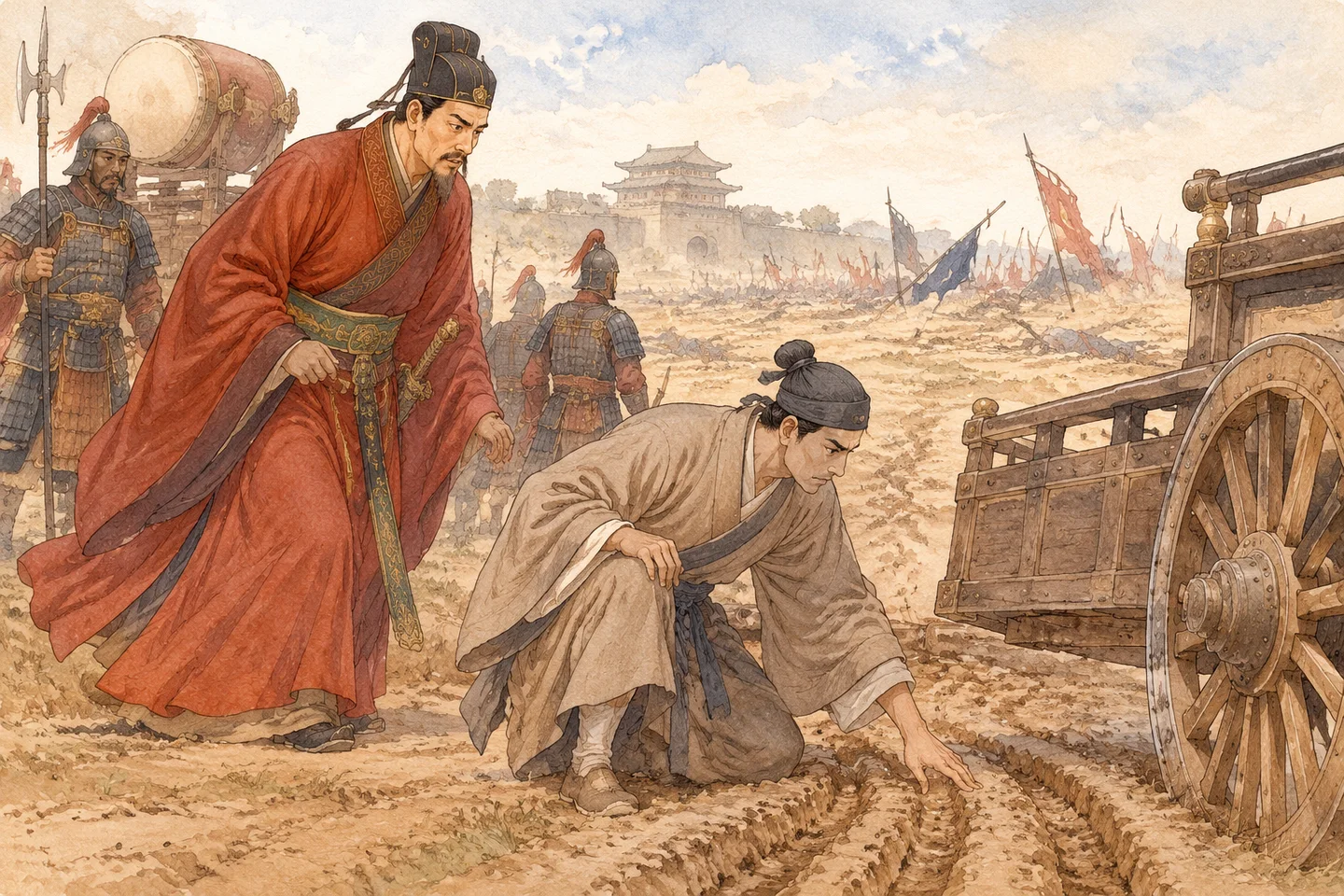
He turned back. “Now we can pursue them.”
Only then did the duke give the order. Lu's troops chased Qi's army out of Lu's territory. Captured weapons and supplies lay scattered behind them.
The invasion had ended with Qi in retreat. Lu had kept its lands. When the news reached Qufu, people could hardly believe it. Once they were sure, excitement filled the streets. Only a short while earlier, the whole city had wondered how Lu could possibly hold back such a powerful neighbor.
A Question After the Battle
By the time the army returned to camp, it was evening. The duke had been puzzling over the day's events. At last he asked, “You would not let me sound the drum the first time, or the second. Why did you give the order only after the third?”
Cao Gui answered plainly. “An army fights with courage. The first drumbeat brings that courage to its height. The second weakens it. By the third, it is spent. Their courage was exhausted while ours was still full. That is why we won.”
The duke asked another question. “Why did you stop me when I wanted to pursue them?”
“Qi is a large state, and its methods are hard to predict. I feared it might be pretending to lose, with troops waiting in ambush ahead. Only when I saw its tangled tracks and fallen flags did I judge that it was truly fleeing.”
The duke was silent for a while. He remembered the moments when his palms were sweating, when he had wanted again and again to sound the drum and Cao Gui had held him back. That difficult waiting had been storing up the army's strength.
This is the story behind the expression yi gu zuo qi, “rouse the spirit with the first drumbeat.” The first round of drums tested strength; the next two tested patience. The side that could wait calmly held the advantage.
At Changshao, the weaker state of Lu had defeated the stronger state of Qi. People remembered the name of a man who held no office. The duke had learned two things: a ruler's confidence depended on whether the people would stand with him, and a battle could turn on waiting for the right moment.
Qi's defeated army returned to Linzi, northeast of present-day Zibo. The young Duke Huan could hardly accept the loss, but he did not rush into another war. Beside him stood a man who had once shot an arrow at his belt hook, yet had become his most trusted adviser. What would that man plan next for Qi?